
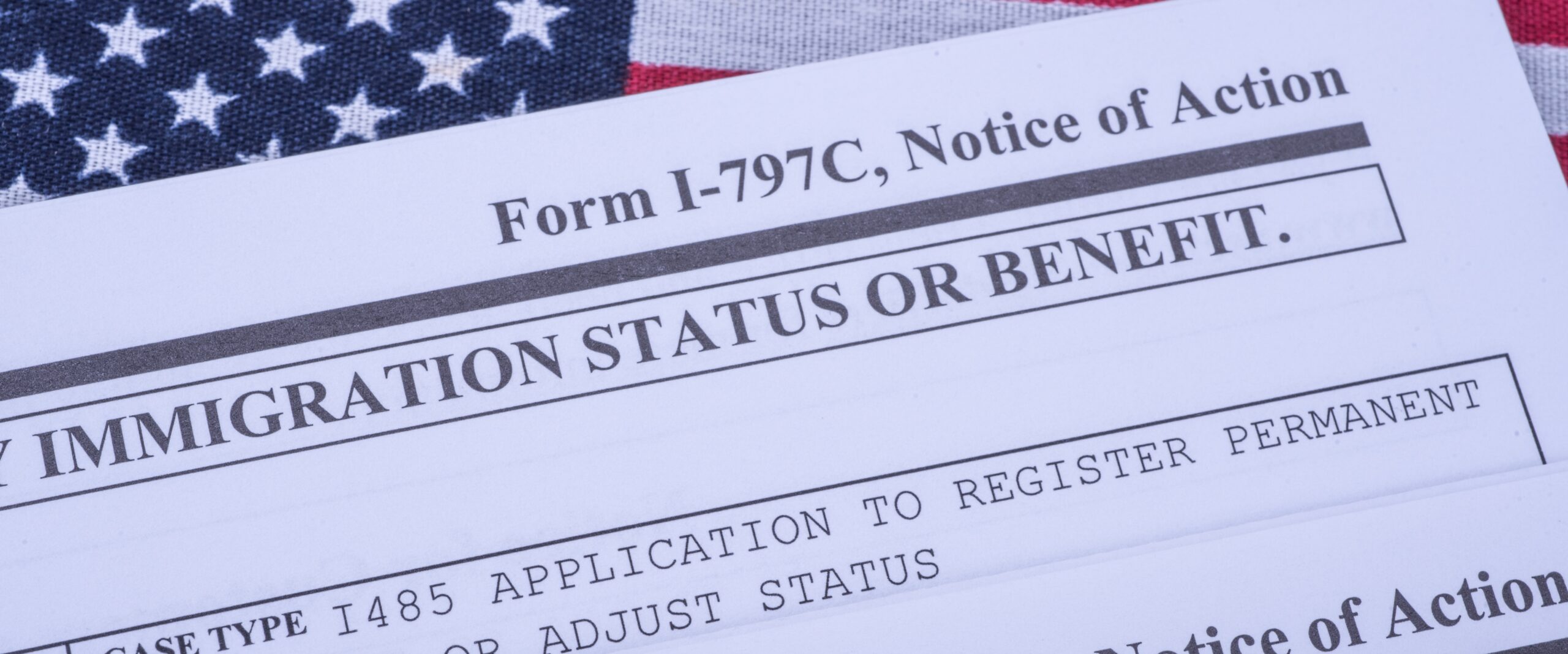

There are many ways to immigrate legally to the United States. Of course, millions of immigrants living in the U.S. have not arrived by legal means – causing some people to say, “My ancestors came here legally. So should everyone else!”
Yes, all present-day immigrants should follow the law in arriving in the U.S. Yet recent analysis suggest that 14 million “undocumented” immigrations are living in the country. One estimate is that the illegal immigrant population reached a record in 2023, following a two-year surge.
That number represents one out of every 25 Americans, or 14%. By comparison, a total of 51.9 million residents are immigrants. That’s nearly four legal immigrants in the U.S. to each unauthorized immigrant.
American immigration law can be quite lenient to undocumented immigrants. In fact, the law generally allows for five categories of legal immigration:
- Family unification
- Employment of skilled workers
- Humanitarian protection
- Investment-based
- Geographical diversity
Pathways to legal immigration through the INA
The Immigration and Nationality Act currently governs American policy, enumerating the various processes of legal immigration. The Act permits the granting of up to 675,000 permanent immigration visas.
In addition, the INA allows an unlimited number of immigrants as spouses, parents, and children younger than 21 years annually. Further, humanitarian protections – for example, asylum, Temporary Protected Status, protections for trafficking victims – requires the president to consult Congress for setting an annual number of refugees to be admitted. More detail follows for each category.
When a person gains immigration status through one of these processes, he or she can seek standing as a Lawful Permanent Resident (LPR). Then, living in the U.S for five years qualifies the person for applying for citizenship. (The minimum residency period is three years for those married to U.S. citizens.)
The bosom of America is open to receive not only the Opulent and respected Stranger, but the oppressed and persecuted of all Nations and Religions; whom we shall welcome to a participation of all our rights and privileges…
– President George Washington
Below are more details on pathways to legal immigration.
Family-based relief for immigrants
In law, “relief” refers to a court granting someone the solution or help the person sought through the legal process.
One of the most common forms of immigration relief is through naturalization, the first step toward full citizenship.
Naturalization & Lawful Permanent Resident (LPR, green card holder)

Anyone with a so-called green card is classified as a Lawful Permanent Resident who can live and work legally and eventually apply for citizenship after the required waiting period. This plastic card earned its nickname for once having been green in color. Today, the card is yellow. It is also known as Form I-551 and Alien Registration Card.
Each green card has an expiration date of ten years and must be renewed. Otherwise, the holder’s LPR status is valid until it is either abandoned or the federal government revokes it.
The card also assures the LPR of state and local law protection. Green card holders are not allowed to vote in the U.S. Additionally, some jobs with high-level security standards prohibit the hiring of LPRs.
However, an LPR does not retain resident status under all circumstances. Several ways exist for the government to revoke a green card:
- Criminal convictions for offenses such as aggravated felonies and what’s known as crimes involving moral turpitude (CIMT) can trigger revocation. The CIMT offenses generally include fraud, rape, robbery, theft and murder, although this is far from a comprehensive list. Not all crimes necessarily lead to deportation, but some do.
- Moving to another country for more than six months jeopardizes LPR status. To avoid such risk, a green card holder may apply for a re-entry permit (Form I-131) before leaving. Filing the form requires payment of a fee of $630, plus $85 for a biometrics appointment for collecting fingerprints, photographs and signatures.
- Expiration for failure to remove conditions applies to LPRs receiving a temporary card for two years, typically through marriage. While a conditional card grants the same rights as a permanent card, holders must nonetheless file form I-751 within 90 days before expiration to prove a legitimate marriage (or investment, for what’s know as I-829 status). In case of divorce or spousal death, the conditional LPR can apply for a waiver of conditions.
- Fraud such as lying or omitting information on an immigration form can lead to revocation. A common example is sham marriages, typically occurring when an immigrant pays a U.S. citizen for matrimony. Indicators include a short acquaintance before marriage, no common language, and a lack of shared residential history and financial records.
Employment visas
For centuries, the American economy has been highly reliant on immigrant labor. For example, significant numbers of vital jobs held in healthcare today are held by immigrant workers.
Foreign-born workers in healthcare
- 41% of home-health aides
- 28% of personal-care aides
- 26% of physicians & surgeons
- 22% of dentists
- 22% of nursing assistants
- 19% of pharmacists
- 17% of all nurses
Source: National Foundation for American Policy
Immigrant workers are especially prominent in lower-paying occupations. Today, of the 8.5 million undocumented workers in the U.S., 574,000 are construction laborers, and a combined 719,400 work as cooks, maids and housecleaners. Ninety-five percent overall are employed, while barely half have health insurance.
Immigrant work visas
Immigrants may work legally in the United States through temporary employment visas generally valid for one to three years, with extensions available in some cases. Work visas are categorized by letters such as H, L, and E. Here are some common visas.
- H-series visas cover a range of temporary workers. H-1B visas apply to specialized professionals. H-2A and H-2B permit seasonal agriculture and non-agricultural labor respectively. H-3 visas are for non-immigrant trainees without access to training in their home countries. Registered nurses can be eligible for the H-1C visa.
- L-series visas apply to intra-company transfers for managers and executives (L-1A) and for staff with specialized knowledge (L-1B).
- O-series allow highly accomplished artists, scientists, educators, athletes and business leaders to work lawfully in the U.S.
- P-series cover internationally recognized entertainers performing in groups, artists and entertainers in reciprocal exchange programs, internationally recognized athletes, and artists teaching, coaching and performing in unique cultural exchanges programs.
- E-series apply to international investors and trade professionals from countries with treaties with the U.S.
- Other visas are available to religious workers (R-1), cultural exchange participants (Q-1), foreign media (I), NAFTA professionals from Mexico and Canada (TN), and exchange participants working as interns, trainees and au pairs.
Humanitarian protections of immigrants
From refugees of World War II to the Cold War to Vietnam to Afghanistan, the United States has a long history of welcoming oppressed and persecuted immigrants. In 1948, the Displaced Persons Act allowed more than 350,000 Europeans to resettle in the U.S. Similarly, Hungarians and Cuban fleeing communist rule arrived by the tens of thousands in the 1950s into the 1970s.
Another 1.4 million came in the 1970s and 1980s following the Vietnam War. Since 1975, the U.S. has taken in more than 3 million refugees, most recently fleeing the Afghanistan and Ukraine wars. They have entered the country under several classifications.

- Asylees receive protection at the border, an airport, or oceanside port. First, they must pass what’s known as Credible Fear Interview, conducted by a special asylum officer of the United States Citizenship and Immigration Services (USCIS) or the United Nations High Commissioner for Refugees.
The asylum seeker must complete an I-589 form, “Application for Asylum or Withholding of Removal.” Then the applicant must show a “significant possibility” of having suffered persecution on at least one of five grounds. Failure to do so results in “expedited removal,” or deportation usually within 14 days. If successful, the applicant proceeds to immigration court. - Refugees are immigrants undergoing thorough interviews and background checks outside the country. Each interview can last several hours in a process of determining eligibility for admission based on fears of persecution.
To pass the interview, an applicant must come prepared to present documentation of the persecution and related a detailed history of mistreatment. (See “Changes to the refugee review process below.) - Humanitarian Parole grants temporary admission to people during extreme medical emergencies, threats of targeted and individualized harm, family urgencies (for example, visits to dying relatives), and other crises. Applicants must have a U.S. residing sponsor willing to provide financial support.
Application is through Form I-134A, “Application for Travel Document.” The USCIS determines eligibility, and most paroles are limited to no more than one year. - Temporary Protected Status (Form I-821, “Application for Temporary Protected Status”) permits people from countries experiencing warfare, environmental disasters or other extraordinary hardships. To qualify, a recipient must be a national (a resident) of a country designated by the U.S. Department of Homeland Security.
Each recipient must also be free of convictions of a felony or two or more misdemeanors. He or she must also show continuous physical presence and residence in the U.S. since the designation date. A TPS beneficiary may apply for an Employment Authorization Document (EAD) by filing Form I-765, “Request for Employment Authorization.” - U Visas offer protection to victims of serious crimes. To qualify, the victim must have suffered serious abuse and can help in police investigations and in the prosecution of the abuser. Qualifying crimes include murder, manslaughter, domestic violence, kidnapping, rape, torture and felonious assault. A U visa allows is valid for four years and can be extended in some cases. Holders can also become authorized to work legally and pursue a path to permanent residency.
- T Visas protect victims of extreme sex and labor trafficking. Recipients qualify by a U.S. presence due to having been trafficked. They must also face extreme hardship if deported and work with law enforcement to investigate traffickers. Holders of T visas may live and work legally in the U.S. for up to four years.
- VAWA Self-Petition (Form I-360) is a path to a green card for victims of domestic violence. It allows abused spouses, children, or parents of U.S. citizens or Lawful Permanent Residents to apply for green cards without the knowledge or permission of the abusers. (LPRs are non-citizens allowed to live and work permanently in the country.)
A VAWA self petition can be filed even after divorce within two years of the divorce finalization. The benefits apply to children younger than 21 (or 25 if abused), as well as parents of U.S. citizen children 21 years old or older.
Investment-based visas
- An EB-5 investment visa grants a green card (lawful permanent residency) any foreign person investing in a new organization that creates at least 10 full-time jobs. As of 2025, the investment must be in the amount at least $1,050,000. Alternatively, an investment of $800,000 is the minimum for a rural or high-unemployment area.
- Treaty Investment Visas (the E-2 visa) are available for non-citizens who are residents of any country with a treaty with the U.S. The visa requires a “substantial” investment in a U.S. business. There is no fixed minimum, but typically recipients invest $100,000 or more each. Two benefits are that the processing is faster and recipients need not create any jobs.
Geographical diversity visas (green card lottery)
The U.S. Diversity (DV) Program allots from 50,000 to 55,000 visas each year to people from countries with low immigration rates. Also known as the “green card lottery,” the program sets minimum requirements of two years of qualifying work experience or a high school education (or equivalent).
The program aims to diversity the U.S. population. Applicants must have been born in an eligible country and can submit applications online at the website travel.state.gov. A random computer drawing picks the winners, and the application costs nothing.
Changes to the refugee review process
As of January 2026, the USCIS changed its policy to pause and review all pending asylum applications and USCIS benefit applications. Exceptions include immediate relatives of U.S. citizens, children adopted abroad, and athletes, coach and their families attending the World Cup and other sporting events. Other new policies:
- A Department of Homeland Security memo filed in federal court said that refugees applying for green cards must return to federal custody for application review one year after admission to the U.S. The new policy may face legal challenges.
- The DHS plans to re-screen 200,000 refugees admitted into the United States between January 2021 and January 2025.
- As of early 2026, the Trump administration has implemented a new travel ban blocking immigrants from 17 countries and limiting immigrants from about 20 more. The policy bans half of all previously legal immigrants and nearly 90% of African immigrant visas, according to the Cato Institute.